 By Henry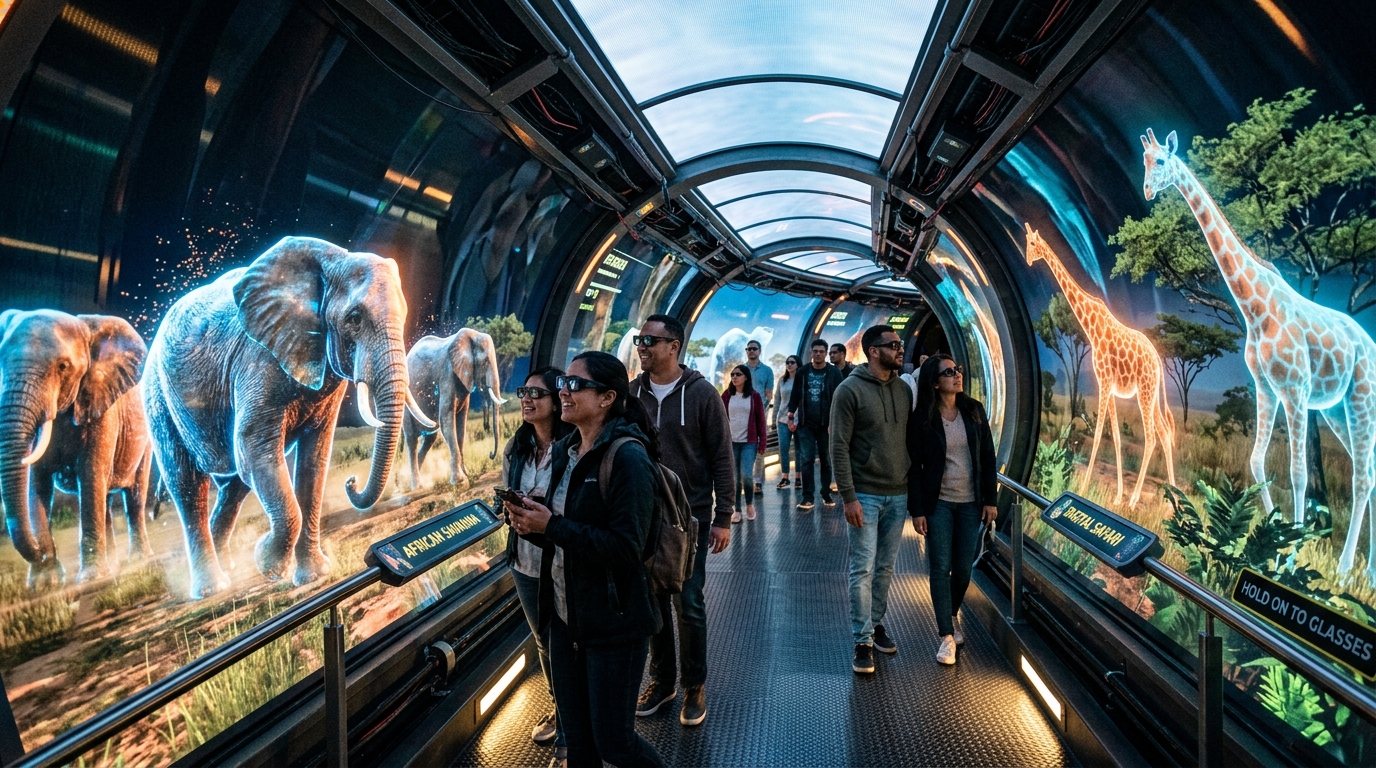
Picture this: you step into a dimly lit tunnel, slip on a pair of lightweight 3D glasses, and suddenly a full-grown elephant walks right past you. A polar bear shuffles across the ice. A T-Rex turns its head and looks you in the eye. Your hand reaches out and passes straight through the animal because it is made of light. No cages. No stressed creatures pacing behind glass. Just pure wonder.
That is the heart of an artificial zoo. These places use holograms, projection mapping, augmented reality, and sometimes virtual reality to create immersive wildlife encounters without keeping a single live animal in captivity. For eco-conscious travelers, families, and anyone who cares about animal welfare, they feel like a genuine step into the next era of wildlife experiences.
What Exactly Is an Artificial Zoo?
An artificial zoo (often called a hologram zoo or digital zoo) is an indoor attraction that replaces live animals with highly realistic three-dimensional projections. The technology creates life-sized animals that move, roar, and interact with their digital habitats in ways that feel surprisingly real.
Unlike a traditional zoo, nothing is confined. Visitors walk through themed tunnels or rooms while specialized glasses and laser systems make the animals appear to float in the air around them. You can “stand” next to a giraffe, watch a whale swim overhead, or face a charging rhinoceros without any risk to the animal or yourself.
The concept took off in a big way when Axiom Holographics opened the world’s first major hologram zoo in Brisbane, Australia, in 2023. Time Magazine named the technology one of the best inventions of that year. Since then, similar attractions have popped up in cities across Australia, the United States, Canada, Europe, Mexico, Turkey, and India. Some focus purely on holograms. Others blend 14-D cinema, digital safaris, and interactive zones for a fuller experience.
These venues answer a growing question many of us ask: Can we still enjoy close encounters with wildlife while treating animals better?
How Do Artificial Zoos Work?
The magic starts with advanced holographic and augmented reality technology. Guests put on polarised or position-tracked 3D glasses. These glasses work with laser projectors and special screens lining the walls (and sometimes floors and ceilings) of long tunnels or enclosed rooms.
A graphics engine creates a unique image for each eye based on your position. The result looks solid and three-dimensional. Animals appear to walk into the space with you. Some systems add wind, temperature changes, scents, and surround sound to heighten the immersion. A few include interactive elements where you can “feed” digital fish or trigger simple responses with motion controllers.
Projection mapping and animatronics sometimes appear alongside pure holograms. In hybrid spots, digital gardens, mazes, and flying theaters expand the experience beyond the animal displays. The technology keeps improving, so the animals look more detailed and behave more naturally with every new installation.
Importantly, this is not the same as sitting in a VR headset that blocks out the real world. You still see your family and the physical space around you while the digital wildlife appears in the room. That shared, social quality makes it especially appealing for groups and kids.
Artificial Zoo vs Traditional Zoo: A Clear Comparison
Traditional zoos have educated millions and funded important conservation work. Many people form lifelong connections to animals by seeing them in person. At the same time, critics point to real welfare challenges. Some species struggle in captivity. Enclosures can never fully match the scale of natural ranges. Stereotypic behaviors (pacing, rocking) appear more often than we like to admit.
An artificial zoo sidesteps those issues completely. There is no feeding schedule to disrupt natural patterns, no risk of zoonotic disease, and no need to separate social groups or transport animals between facilities. Content can change seasonally or thematically without moving a single living creature. Dinosaurs, deep-sea animals, and extinct species become possible without ethical trade-offs.
Visitors often notice another difference right away. In many traditional zoos, large animals spend a lot of time resting. In a hologram experience, you routinely see lions chasing prey, elephants interacting in herds, or whales breaching at full size. The action feels closer to a nature documentary than a typical afternoon at the zoo.
That said, some people still prefer the authenticity of a living animal. The smell, the unpredictable movement, and the quiet knowledge that a real being is sharing the space can create a different kind of emotional spark. Artificial zoos do not replace every value of traditional ones. They offer a strong complementary option, especially for families who want ethical experiences or for cities that lack the space and resources for large live collections.
Top Artificial Zoo Experiences Around the World
Several standout locations already deliver impressive versions of the concept.
Brisbane’s original Hologram Zoo set the standard with long holographic tunnels featuring African savannahs, Arctic ice, Australian wildlife, and dinosaurs. Guests wear tracked glasses and walk through life-sized scenes that include a sky roof where animals appear overhead. Melbourne followed with a similar setup.
In the United States, Zoocade in Austin, Texas, became the first major hologram zoo. Its 60-foot tunnels take visitors through Africa, Asia, and prehistoric worlds. Interactive rooms let people “swim” with whales or feed digital fish. Ticket prices often start around $20–25 for a 30-minute experience.
Niagara Falls added its own Hologram Zoo, giving tourists an indoor option that pairs well with the falls themselves. Shows rotate through Africa, Australia, and dinosaurs. Other North American spots have opened in places like Lehigh Valley, Pennsylvania, and various Canadian cities including Brandon, Manitoba.
Europe and beyond are catching up. Copenhagen has a hologram zoo. Istanbul’s DigiZoo claims one of the largest footprints, mixing holograms, VR, and educational zones focused on climate themes. Mexico City hosts a Latin American version with African, Arctic, and dinosaur sections. In India, Indore’s virtual zoo at the Kamla Nehru Zoological Garden combines a 14-D cinema, digital jungle safari, hologram displays, and interactive mazes. Tickets there stay notably affordable.
Many of these attractions sit inside shopping centers or urban districts, making them easy to reach without a long trek to the outskirts of town.
Benefits for Families, Education, and Conservation
Families consistently rank these experiences high for engagement. Kids who might grow restless looking at resting animals stay focused when a holographic rhino charges or a pack of velociraptors appears. The shared glasses-and-tunnel format keeps everyone together, which parents appreciate.
Educational value runs deeper than pure entertainment. Many exhibits include facts about habitats, behaviors, and threats facing the real species. Because the technology can show animals in their natural environments (or historical ones), visitors gain a clearer sense of scale and ecology. School groups and field trips find the format especially useful.
From a conservation angle, artificial zoos reduce demand for captive animals while still building emotional connections to wildlife. They can highlight endangered species without removing individuals from the wild. Some venues pair the experience with messaging about habitat protection and climate impacts. The environmental footprint of the attraction itself stays far lower than a facility that requires constant food, water, veterinary care, and habitat maintenance for living collections.
Animal welfare advocates often welcome the shift. No captivity means no stress from constant visitor proximity, no shortened lifespans for certain species, and no ethical compromises around breeding or transfer programs.
Planning Your Visit: Tips for the Best Experience
Most hologram zoos run on timed entries, so booking ahead online is smart, especially on weekends and holidays. Experiences typically last 30 to 60 minutes for the main tunnel loops, with optional add-ons for interactive rooms or photo booths.
Tickets usually range from about $20 to $40 per person depending on the location and package. Children often receive discounts. Look for family or group rates. Some venues offer school-trip packages or birthday party options.
Wear comfortable shoes. You will be walking through tunnels and rooms. The glasses fit over regular eyeglasses in most cases. The spaces are climate-controlled, so weather is never an issue. Photography policies vary; many allow personal photos but restrict professional equipment or flash.
If you are traveling with very young children, check age recommendations. The animals can be large and loud, which delights most kids but might startle some toddlers. Accessibility is generally good because the experiences are indoor and on flat surfaces, though you should confirm wheelchair access for specific sites.
Combine the visit with nearby attractions when possible. Niagara Falls, urban shopping districts, or existing traditional zoos (as in Indore) create easy full-day itineraries.
The Future of Wildlife Encounters
Artificial zoos are still early in their evolution. Expect sharper resolution, richer sensory effects, more interactive storytelling, and tighter links to real conservation projects. Hybrid models that place digital experiences inside traditional zoos already appear in some places, offering the best of both worlds.
As the technology spreads, more cities will gain access to high-quality wildlife education without the land, cost, or ethical challenges of large captive collections. For travelers who want modern, ethical, and memorable encounters, these venues already deliver something special.
3 Actionable Tips to Try Today
- Search for the nearest hologram or virtual zoo and check current themes and ticket availability.
- Read recent visitor reviews focused on family suitability and educational content.
- Pair a digital wildlife visit with a donation or action supporting habitat protection for the real species you “meet.”
These attractions will not replace every traditional zoo experience, and they do not need to. They expand the options available to people who care about both wonder and welfare. The next time you want to stand face-to-face with a lion or a dinosaur, you might find that the most ethical and exciting version is made of light.
Share your thoughts below if you have visited one of these places or plan to soon. What animal would you most want to meet in holographic form?
You May Also Like: Pabington Explained: The Viral Trend You’re Seeing Everywhere
FAQs
What is an artificial zoo?
An artificial zoo (also called a hologram zoo or digital zoo) is an indoor attraction that uses laser holograms, 3D glasses, projection mapping, and sometimes augmented reality to create life-sized animals and habitats. Visitors walk through tunnels or rooms where elephants, polar bears, dinosaurs, and other creatures appear to move around them, but no live animals are kept in captivity.
How do artificial zoos work?
Guests put on special polarised or position-tracked 3D glasses. Laser projectors and screens then create unique images for each eye, making the animals look solid and three-dimensional in the space. Some experiences add sound, wind, temperature changes, or scents for stronger immersion. The animals are pure light, so you can walk through them.
Are artificial zoos better than traditional zoos?
They solve several major welfare concerns because no animals are confined, stressed, or transported. You often see more natural and dramatic behaviors (chases, herds interacting, full-size whales) than in many traditional exhibits. Traditional zoos still offer the authenticity of living animals and fund real conservation work. Many people now view the two as complementary rather than direct competitors.
Where can I visit a hologram zoo?
Popular locations include the original Hologram Zoo in Brisbane (and Melbourne) in Australia, Zoocade in Austin, Texas, Hologram Zoo Niagara, sites in Copenhagen, Istanbul’s DigiZoo, Mexico City, and India’s first virtual zoo in Indore. New ones continue to open in shopping centers and urban areas across North America, Europe, and Asia.
How much do artificial zoo tickets cost?
Prices typically range from about $20 to $40 per person depending on the location and package. Many venues offer family discounts, child rates, and timed entry. Experiences usually last 30 to 60 minutes. Booking online in advance is recommended, especially on weekends.
Are artificial zoos good for kids and school trips?
Yes. Children tend to stay highly engaged because the animals move, roar, and appear at full size right in front of them. The shared glasses-and-tunnel format keeps families together. Many sites provide educational facts about habitats and conservation, making them popular for school groups and field trips. Very young toddlers may find the large, loud animals startling, so check age guidance for specific venues.
Do artificial zoos help with animal conservation and welfare?
They eliminate captivity stress, disease risks, and the need to remove animals from the wild. Venues can show endangered or extinct species without any impact on real populations. Many include conservation messaging. While they do not replace the breeding and research roles of some traditional zoos, they reduce demand for captive animals and build public interest in protecting wildlife in their natural habitats.