 By Henry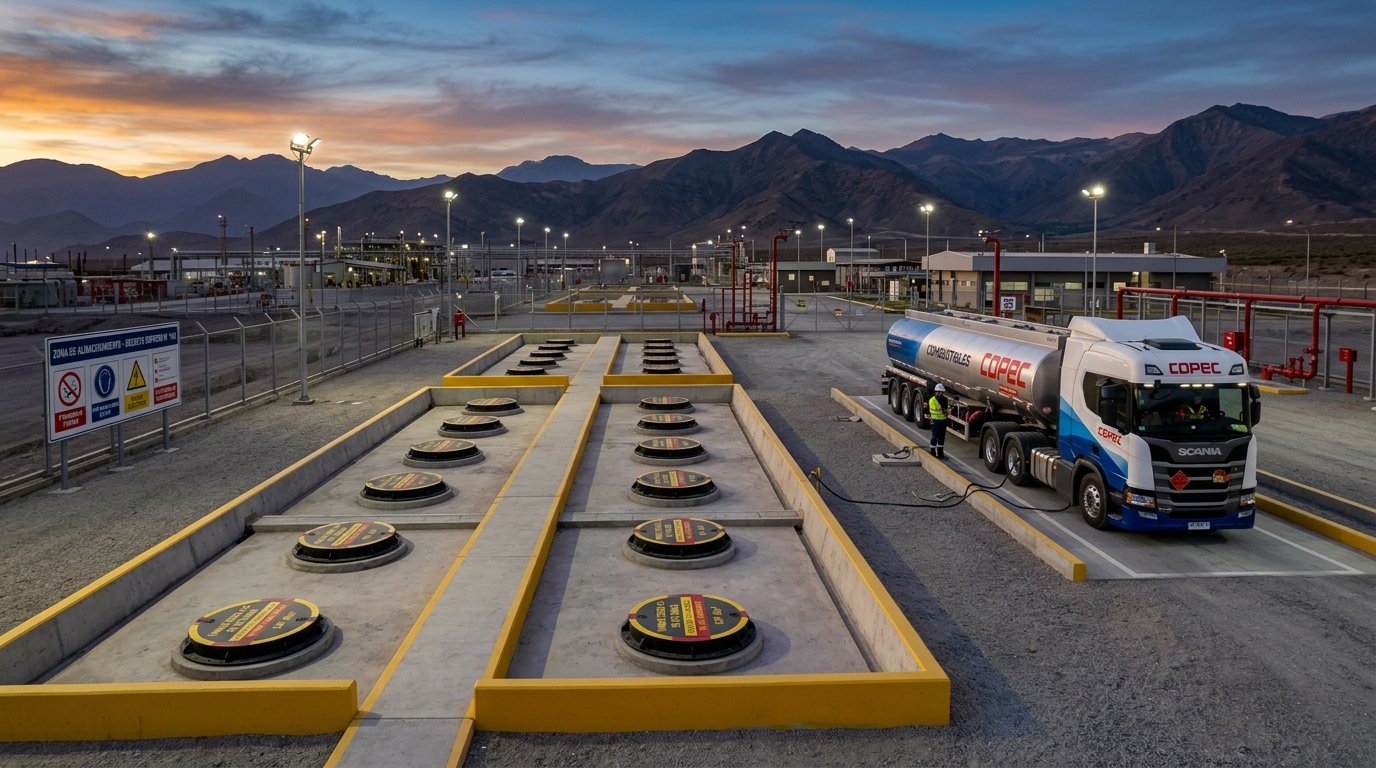
Imagine a single undetected leak from an underground tank quietly contaminating soil and groundwater for months. The cleanup bill runs into the millions, SEC fines pile up, and your operation grinds to a halt. For station owners, fuel transport operators, industrial logistics managers, and prevención de riesgos specialists across Chile. It is exactly the kind of risk that Decreto Supremo 160 was written to eliminate.
Published in the Diario Oficial on July 7, 2009, and effective from October 5 of that year, Decreto Supremo 160 (often called DS 160) is Chile’s cornerstone regulation for the safe production, refining, transport, storage, distribution, and supply of combustibles líquidos. Issued by the Ministerio de Economía, Fomento y Reconstrucción and enforced by the Superintendencia de Electricidad y Combustibles (SEC Chile), it replaced older rules such as DS 90 of 1996 and DS 379 of 1985. The regulation covers both new and existing installations, including those handling petroleum derivatives and biocombustibles líquidos such as biodiesel and bioetanol. Its goal is crystal clear: control risks so that operations never endanger people, property, or the environment.
If you manage a service station, operate tanker trucks, or oversee industrial fuel storage, understanding and applying this reglamento de seguridad is not optional. It is the practical roadmap that reduces corporate liability, protects your team, and keeps your business running smoothly. In the pages ahead, you will find clear explanations, real-world scenarios, and actionable steps to achieve full cumplimiento del decreto supremo 160.
What Decreto Supremo 160 Actually Requires
DS 160 sets minimum safety standards for every stage of the fuel lifecycle. It applies to anyone who designs, builds, operates, inspects, or maintains installations that store or handle liquid fuels. The regulation is divided into clear titles that address general provisions, specific installation types, transport vehicles, and operational controls.
One of the most important shifts it introduced was the mandatory use of modern risk-management tools. Every relevant operator must maintain either a Sistema de Gestión de Seguridad y Riesgo (SGSR) or, when loading fuel to vehicles, a Manual de Seguridad de Combustibles Líquidos (MSCL). Both documents must include up-to-date emergency plans, operation and maintenance procedures, and annual reviews. Records of inspections, training, and incidents must be kept in bound books and made available to SEC inspectors at any time.
The regulation also tightened rules on physical infrastructure. Tanks, piping, containment systems, fire protection, and electrical installations must meet recognized international standards. Distances between tanks, buildings, and public roads are strictly defined to limit the spread of fire or vapors.
Storage Requirements: Getting It Right from the Ground Up
Proper almacenamiento de combustibles según DS 160 is the foundation of compliance. The regulation pays special attention to tanques enterrados because they are the only acceptable method for supplying vehicles at estaciones de servicio.
Key rules for storage installations include:
- Vehicle fueling (automóviles, camiones, buses, naves) must occur exclusively from buried tanks. Surface tanks cannot be used for this purpose under any circumstances, even in rural or industrial settings.
- Total storage volume of 1,100 liters or more requires formal inscription in the SEC registry before the installation goes live. Smaller setups are exempt from registration but must still meet every safety provision.
- Tanks, whether single-wall or double-wall, must carry product certification and be installed according to approved engineering plans.
- Secondary containment (fosos estancos) is mandatory to capture any leaks or spills.
- Venting systems, overfill protection, and leak-detection equipment must function as designed.
- Periodic hermeticity tests and cathodic protection checks are required for underground tanks to catch corrosion early.
In practice, many station owners discover during an SEC audit that an older surface tank was never formally decommissioned. The regulation spells out a precise closure procedure: notify the SEC, remove all residues, inert the tank atmosphere, fill it with inert material, and submit updated plans within 30 days. Skipping these steps can lead to ongoing liability even after the tank is out of service.
For industrial sites storing larger volumes, the same principles apply but on a bigger scale. Double-wall tanks with interstitial monitoring have become the preferred solution because they offer early warning of any breach while meeting the latest design updates discussed in recent regulatory consultations.
Transport Operations: Safe Journeys for Camiones Tanque
Fuel does not stay in one place. DS 160 dedicates an entire section to the safe transporte of combustibles líquidos. If you operate or contract tanker trucks, these requirements directly affect your daily routine.
Camiones tanque must be inscribed with the SEC and cannot exceed 15 years of age in many cases. Each vehicle requires regular technical inspections, proper labeling, emergency equipment, and drivers trained specifically in fuel handling. Loading and unloading procedures are detailed in the SGSR or MSCL, including bonding and grounding to prevent static sparks.
A common myth is that “as long as the truck looks clean, it is fine.” In reality, inspectors look for maintenance records, pressure-test certificates, and proof that drivers have completed the required safety courses. One transport operator in the central region avoided a major citation last year simply because every truck carried an updated emergency response card that matched the MSCL.
Estaciones de Servicio and Vehicle Supply Installations
Service stations face the strictest operational scrutiny because the public interacts with them daily. Title VII of the regulation covers these sites specifically.
You must provide clear signage, fire extinguishers in designated locations, and spill-response kits at every dispenser. Electrical equipment in hazardous zones must be explosion-proof. Vapor recovery systems (when required) need certification and regular testing.
Staff training is not a one-time event. The MSCL must outline ongoing programs that cover leak detection, emergency shutdown procedures, and customer safety briefings. Preventionistas de riesgos often recommend quarterly drills so that every employee knows exactly what to do when an alarm sounds.
Building and Maintaining Your SGSR and MSCL
The heart of ongoing compliance lies in these two living documents.
The Sistema de Gestión de Seguridad y Riesgo (SGSR) is required for virtually every installation covered by DS 160. It must identify hazards, define responsibilities, set training schedules, and outline how you will measure and improve performance. An annual review ensures the system evolves with your operation.
When your facility loads fuel into vehicles, you also need the Manual de Seguridad de Combustibles Líquidos (MSCL). This document goes into granular detail on dispensing procedures, equipment checks before each delivery, and immediate response to spills or overfills. Both the SGSR and MSCL must contain a comprehensive emergency and accident-response plan that is tested and updated regularly.
Many EHS consultants recommend creating a simple one-page summary of these plans and posting it visibly for staff. It turns complex legal language into daily habits that actually prevent incidents.
Inspections, Maintenance, and SEC Oversight
Compliance is not a set-it-and-forget-it exercise. The regulation demands systematic inspections by qualified prevención de riesgos specialists. Frequency depends on the type of installation, but records must be meticulous.
The SEC can visit unannounced. During an inspection they will review your SGSR or MSCL, check tank certification stickers, verify maintenance logs, and test emergency equipment. Corrective actions must be documented and completed on schedule.
Accidents trigger immediate notification to the SEC plus a full investigation report that includes root-cause analysis and preventive measures. Timely, transparent reporting often turns a potential fine into a demonstration of good-faith compliance.
Practical Steps to Achieve Full Compliance Today
Here are concrete actions that station owners and logistics managers across Chile have used successfully:
- Conduct an internal audit against the latest DS 160 requirements. Compare your current tanks, piping, and documentation with the regulation’s checklists.
- Update or create your SGSR and MSCL with help from a certified preventionista. Make sure emergency plans reflect your actual site layout and staff size.
- Schedule the next round of tank integrity tests and vehicle inspections before the SEC requests them.
- Train every employee who touches fuel-handling equipment. Document the sessions and keep attendance records.
- Review your insurance policies to confirm they align with the risk controls required by the regulation. Many carriers now offer discounts for documented DS 160 compliance.
Small changes, such as installing secondary containment around fill pipes or adding automatic shut-off valves, can dramatically lower your risk profile.
Why Investing in Compliance Pays Off
Operators who treat Decreto Supremo 160 as a strategic advantage rather than a bureaucratic burden report fewer incidents, lower insurance premiums, and stronger relationships with regulators. In an era when environmental responsibility matters more than ever, full adherence to this reglamento de seguridad demonstrates that your company puts safety and sustainability first.
The regulation continues to evolve. Recent consultations have focused on updating tank-design standards and incorporating lessons from new biocombustibles technologies. Staying informed through official SEC channels ensures you never fall behind.
3 Actionable Tips to Try This Week
- Pull out your current SGSR or MSCL and schedule the annual review date in your calendar today.
- Walk your site with a checklist from Article 255 and confirm that every vehicle-fueling point uses only approved buried tanks.
- Book a refresher training session for your team on spill response. Even a one-hour session can refresh critical skills.
By taking these steps, you turn regulatory pressure into operational excellence.
FAQs
What is the main purpose of Decreto Supremo 160?
It establishes the minimum safety requirements for all stages of liquid fuel handling in Chile to prevent accidents, leaks, and environmental damage.
Do small installations under 1,100 liters need SEC registration?
No, but they must still follow every applicable safety rule in the regulation.
Can I use surface tanks to fuel vehicles at my station?
No. Article 255 clearly states that vehicles may only be supplied from tanques enterrados.
What is the difference between SGSR and MSCL?
The SGSR is the general safety management system. The MSCL is required in addition when your operation loads fuel directly into vehicles.
How often must underground tanks be inspected?
Periodic hermeticity and integrity tests are required according to the schedule in the regulation and your approved maintenance plan.
Does DS 160 apply to biocombustibles?
Yes. The regulation explicitly includes biodiesel, bioetanol, and other liquid biofuels produced from biomass.
What should I do if I discover a leak?
Stop operations immediately, contain the spill, notify the SEC, and follow the emergency procedures in your SGSR or MSCL.